
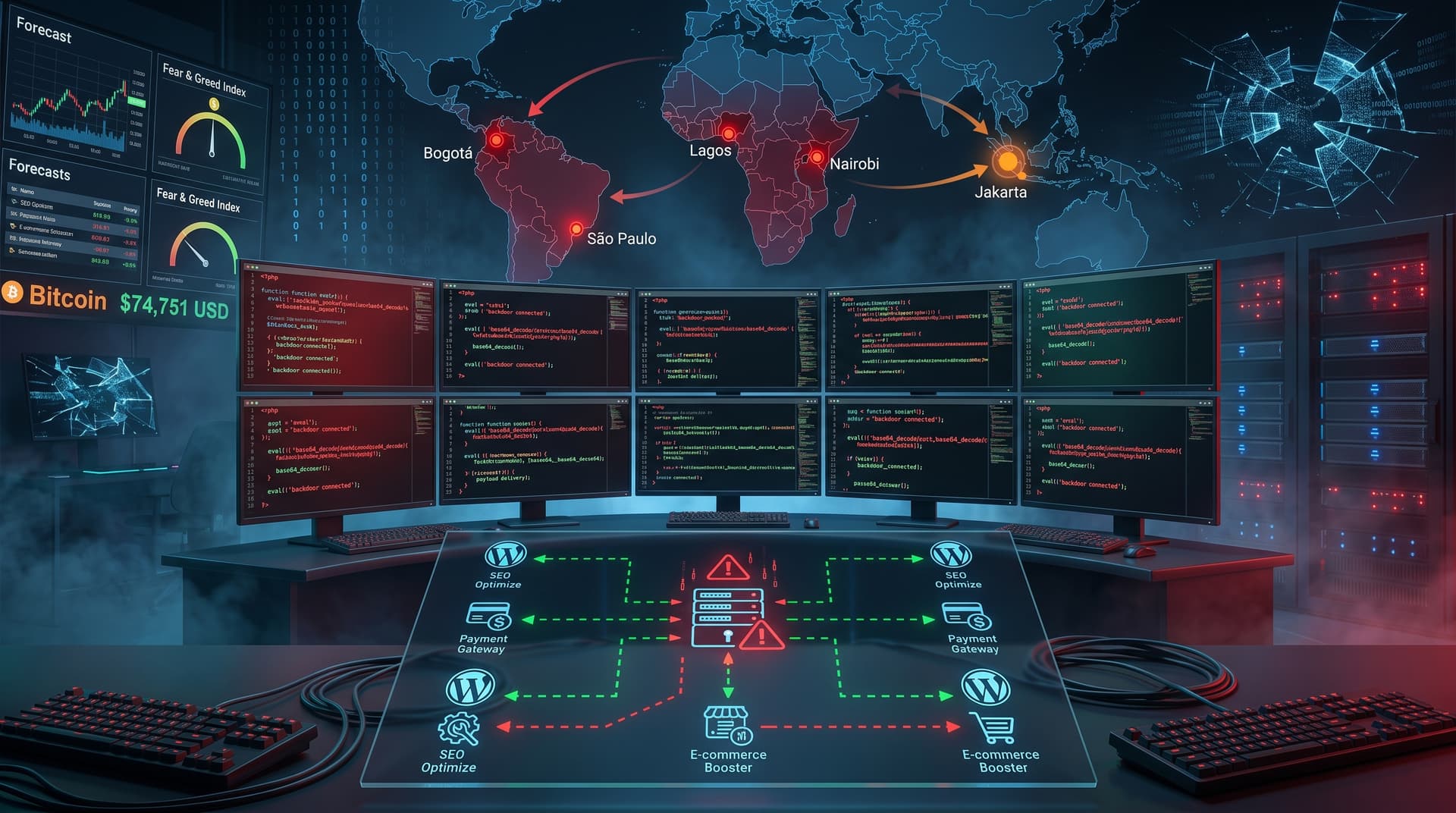
- 1. Attackers bought 30 plugins to insert WordPress backdoors undetected.
- 2. Emerging markets' fintech sites face highest breach risks.
- 3. Crypto Fear & Greed Index drops to 21; Bitcoin rises to $74,751.
Attackers bought 30 inactive WordPress plugins and inserted WordPress backdoors on April 14, 2026. This supply chain attack exposes millions of sites to remote code execution. Small fintech firms in emerging markets suffer most.
Site owners worldwide must scan plugins immediately. Legitimate buyouts bypassed security checks, per WPScan researchers.
Attackers Exploit Plugin Buyouts for Legitimate Access
Cybercriminals targeted dormant WordPress plugins from developers exiting the market. They acquired full ownership rights, including update privileges. Security tools failed to flag these transfers as threats.
WordPress plugin marketplaces apply lax buyer verification. Developers in India, Nigeria, and Brazil frequently sell repositories to fund new projects. This creates a thriving underground economy, according to Sucuri Labs analysis.
WPScan confirmed 30 plugins affected, including SEO tools and payment gateways popular in Southeast Asia.
Backdoors Enable Persistent Remote Exploits
Malicious code embeds PHP webshells using functions like eval() and base64_decode(). Attackers gain shell access to steal data, install ransomware, or mine cryptocurrency silently.
Infected sites deliver phishing payloads or cryptojacking scripts. The WordPress hardening guide from WordPress.org recommends checking update logs for anomalies.
Fintech plugins handling mobile payments in Lagos now risk fund drains.
Emerging Markets Bear the Brunt of WordPress Backdoor Risks
WordPress powers 43% of websites in sub-Saharan Africa, per W3Techs data from January 2026. Kenyan e-commerce merchants rely on compromised plugins for M-Pesa integrations.
Indonesian digital banks use them for customer portals. Latin American remittance platforms in Colombia face outages, halting cross-border transfers.
Local firms prioritize affordability over audits. Resource shortages amplify supply chain vulnerabilities in these regions.
Breaches Impose Massive Financial Burdens
Cleanup costs average $4.45 million per incident, according to IBM's 2025 Cost of a Data Breach Report. Downtime erases daily revenues for small merchants.
Cyber insurance premiums rise 25% post-breach. Hosting providers upsell advanced scans, boosting quarterly earnings by 15%.
Lawsuits target plugin authors and marketplaces, straining developer budgets.
Crypto Markets React to Heightened Cybersecurity Threats
CoinGecko's Fear & Greed Index plunged to 21 on April 14, 2026, signaling extreme fear. Bitcoin climbed 3.5% to $74,751 USD despite web risks.
Ethereum surged 5.0% to $2,335.98 USD. WordPress hosts DeFi dashboards, NFT marketplaces, and wallet connectors vulnerable to exploits.
Nigerian crypto exchanges on WordPress scan urgently. Platforms explore decentralized alternatives like IPFS-hosted sites.
XRP gained 2.4% to $1.37 USD; BNB rose 2.2% to $619.17 USD, per CoinGecko.
Buyouts Bypass Traditional Security Reviews
Supply chain buyouts evade GitHub-style repository audits. Open-source culture enables quick transfers, as TechCrunch detailed in their 2021 analysis updated in 2026.
WordPress directories list over 60,000 plugins. Users deploy 20-50 per site, accelerating breach propagation.
Global Defenses Strengthen Against Plugin Backdoors
Deactivate recent plugins immediately. Deploy Wordfence or Sucuri scanners for full audits. Update WordPress core to version 6.5.2.
Hosting firms monitor anomalous traffic spikes. Developers implement post-sale code diffs.
African cybersecurity hubs in Johannesburg offer free training. Asian regulators blacklist tainted plugins.
Hosting Industry Capitalizes on Supply Chain Chaos
Managed hosts like SiteGround report 30% demand spikes for security bundles. Revenue from breach response services jumps.
Agencies launch vetted plugin directories. Enterprises insert supply chain audits into vendor contracts.
Ecosystem Reforms Address Core Flaws
Plugin directories now track ownership changes beyond download counts. Transparency mandates roll out globally.
Enable two-factor authentication (2FA). Restrict file permissions. Schedule automated backups.
Containment Efforts and Future Outlook
WordPress.org flagged the 30 plugins for removal. Mass scans reveal infection scope within days.
Marketplaces pause sales pending reviews. Open-source audits restore confidence.
Crypto firms harden WordPress setups or migrate to blockchain CMS against backdoor threats. Markets anticipate resilience, with Bitcoin eyeing $80,000 USD.
Nigerian fintechs lead adoption of multi-signature wallets post-WordPress backdoor threat.