
- 1. US v. Heppner AI privilege ruling excludes AI chats from attorney-client protection.
- 2. Fear & Greed Index falls to 23 on privacy ruling fears.
- 3. BTC rises 1.1% to $74,623 amid blockchain privacy push.
Key Takeaways 1. US v. Heppner AI privilege ruling excludes AI chats from attorney-client protection. 2. Fear & Greed Index drops to 23 amid legal privacy concerns over AI tools. 3. BTC climbs 1.1% to $74,623, driving demand for blockchain privacy solutions.
In US v. Heppner AI privilege case, a Southern District of New York court ruled April 16, 2026, that AI chats lack attorney-client protection. Prosecutors accessed them during discovery. Blockchain privacy tools emerge as secure alternatives.
Defendant Paul Heppner used AI platforms for legal strategy discussions. Prosecutors argued third-party AI providers shatter confidentiality. The judge agreed. AI servers fail traditional privilege tests.
Details of US v. Heppner AI Privilege Ruling
US v. Heppner AI privilege case sits on the S.D.N.Y. 2026 docket. Cornell Law School's Wex Legal Dictionary defines attorney-client privilege as needing confidentiality and legal purpose (Law Cornell). AI systems store data on external servers. This fails both core criteria.
Legal experts highlight that AI firms retain chat logs for training models. Such practices destroy privilege claims. The ruling echoes federal court warnings on tech-based legal advice.
Blockchain counters these issues with zero-knowledge proofs. These allow private verification without central storage. Lawyers globally pivot to decentralized tools after Heppner.
Blockchain Privacy Frameworks Gain Traction Globally
US v. Heppner AI privilege ruling boosts blockchain use in legal cybersecurity. End-to-end encrypted ledgers block third-party access. They mimic privilege protections effectively.
In Nigeria, fintech giant Flutterwave integrates blockchain for secure client document sharing. Leaders cite Heppner risks to ditch AI reliance. Singapore developers craft AI-blockchain hybrids focused on privacy.
Brazilian startups deploy Ethereum-based decentralized identity for consultations. These emphasize data sovereignty in emerging markets. Such tools thrive where U.S. AI dominance falters.
Cybersecurity reports stress AI's hack vulnerabilities. Blockchain's immutability and sharding defeat breaches better than centralized systems.
Crypto Markets React to US v. Heppner AI Privilege Fallout
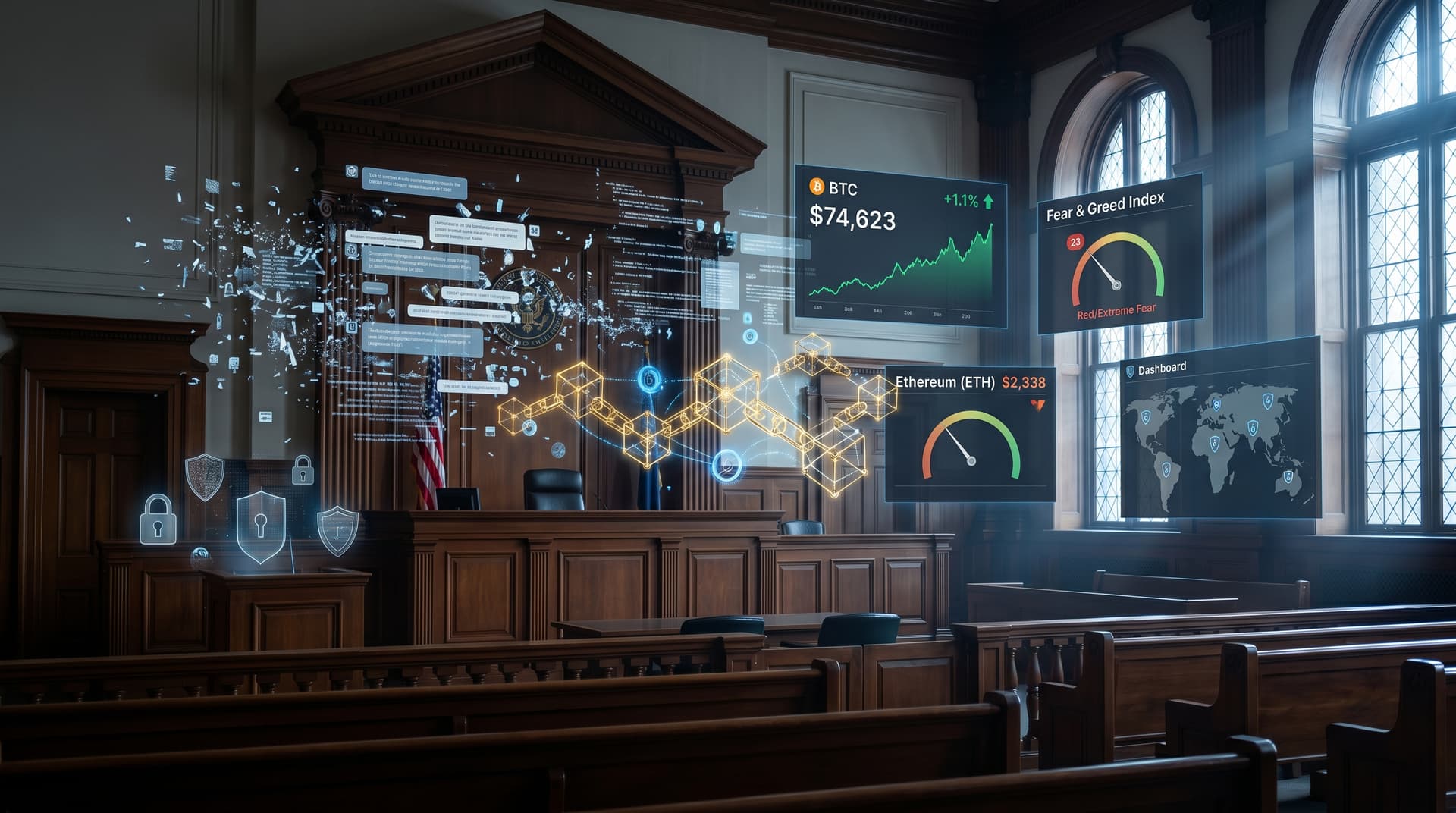
Markets react to US v. Heppner AI privilege ruling. Alternative.me's Fear & Greed Index hits 23, signaling Extreme Fear (Alternative.me Fear & Greed Index).
CoinGecko reports Bitcoin at $74,623 USD, up 1.1% on April 16, 2026 (CoinGecko). Ethereum rises 0.8% to $2,338 USD. XRP jumps 3.9% to $1.41 USD.
BNB gains 1.8% to $622 USD. USDT holds steady at $1.00 USD. Privacy coins face review, but Bitcoin leads volatility.
Traders tie fear to looming AI rules affecting crypto. Zero-knowledge proofs like zk-SNARKs address Heppner-exposed centralization risks.
Global Shifts in Legal Tech Privacy Post US v. Heppner AI Privilege
Nigerian lawyers use blockchain wallets for sensitive files. They reference Heppner flaws directly. India's bar councils debate decentralized platforms.
Brazil tests Ethereum Layer-2 for encrypted sessions. Global South prioritizes data control over U.S. AI tools.
U.S. firms audit AI now post-ruling. Europe aligns with GDPR via blockchain verification.
Blockchain Cybersecurity Advantages Over AI
US v. Heppner AI privilege case exposes AI flaw: centralized servers invite subpoenas. Blockchain decentralizes data for resilience.
CoinDesk explains zero-knowledge proofs verify data without revealing it—perfect for privilege scenarios (CoinDesk).
Firms roll out blockchain VPNs and quantum-resistant encryption. Legal tech readies for threats beyond Heppner.
Future Implications of US v. Heppner AI Privilege Ruling
US v. Heppner AI privilege case may see appeals refining tech privilege tests. Blockchain groups set standards.
SEC and regulators eye privacy tech. BTC holds at $74,623 USD. These rulings shape blockchain's legal finance role worldwide.