- 1. 10 US states crack down on crypto kiosks after 325% fraud surge.
- 2. Bitcoin drops 1% to $75,608; Fear & Greed Index hits 26.
- 3. Global kiosks thrive in unbanked markets like Nigeria and Kenya.
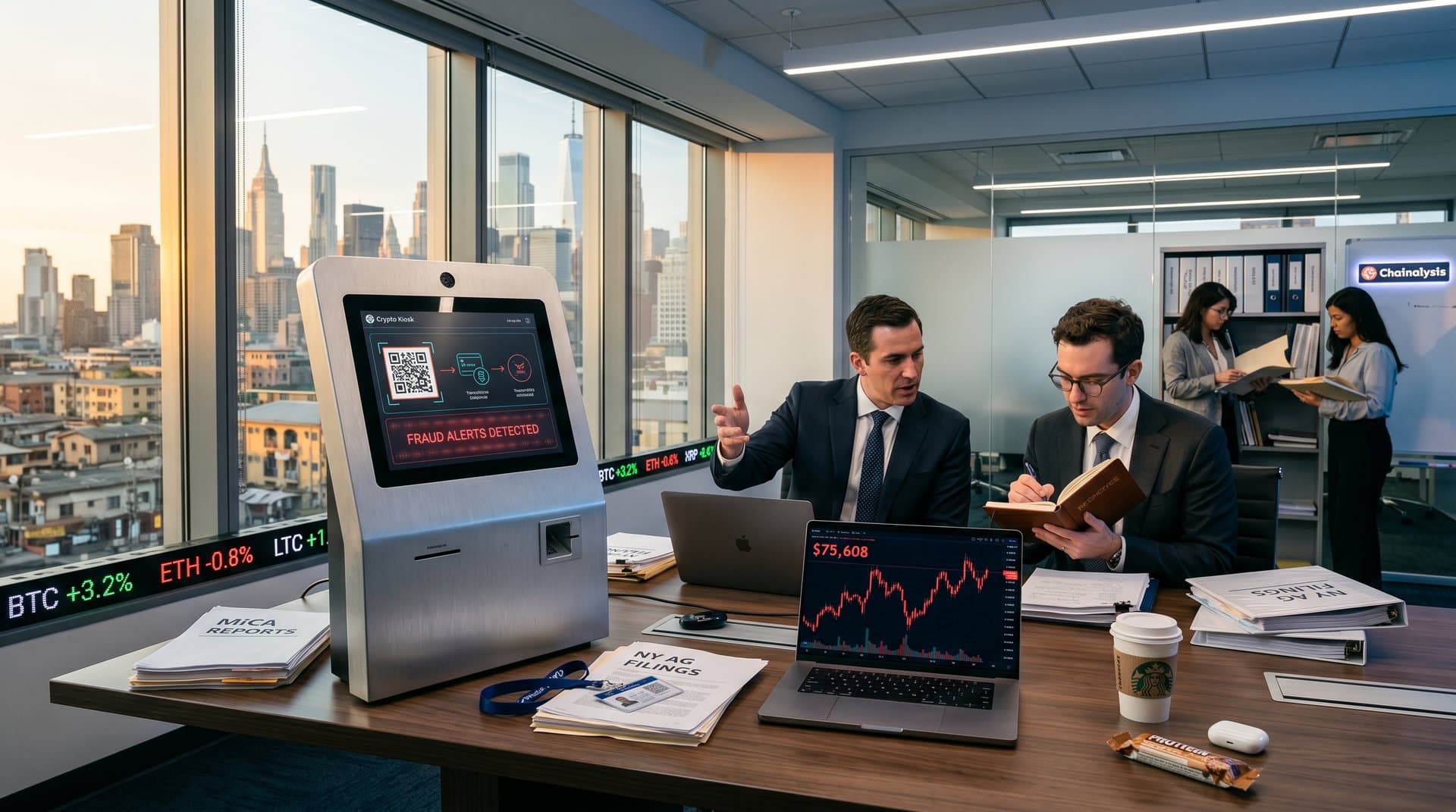
Ten US states, including New York and California, launch regulatory actions against crypto kiosks. Fraud complaints surged 325% in 2023, per New York Attorney General Letitia James. Bitcoin fell 1% to $75,608, according to CoinGecko.
The Crypto Fear & Greed Index dropped to 26, signaling extreme fear, via Alternative.me. Ethereum declined 2.8% to $2,236.83. State attorneys general highlight undisclosed fees and scams, as detailed in a PYMNTS report.
Crypto kiosks operate like ATMs. Users insert cash and scan wallet QR codes for instant bitcoin delivery. Demand grows in unbanked areas from Lagos to Manila, where mobile money thrives.
Fraud Surge Drives US State Regulations on Crypto Kiosks
Scammers target kiosks with hidden 20-30% spreads and locked funds. The Federal Trade Commission recorded 47,000 crypto scams in 2023, many linked to kiosks, per FTC data. Money laundering risks fuel demands for operator licensing.
New York mandates $1 million bonds for operators. California requires clear fee disclosures. Texas investigates over 500 kiosks. Operators argue these rules limit access for 1.4 billion unbanked people worldwide, according to the World Bank.
Blockchain transparency fights fraud effectively. Crypto kiosks bridge cash to DeFi platforms like Uniswap. After 2024 Bitcoin ETF approvals, retail trading volumes reached $50 billion monthly, Chainalysis reports.
- Asset: BTC · Price (USD): 75,608 · 24h Change: -1.0%
- Asset: ETH · Price (USD): 2,236.83 · 24h Change: -2.8%
- Asset: XRP · Price (USD): 1.36 · 24h Change: -1.8%
- Asset: BNB · Price (USD): 613.35 · 24h Change: -1.7%
CoinGecko tracks these price dips linked to regulatory headlines.
Crypto Kiosks Fuel Adoption in Emerging Markets Worldwide
Nigeria hosts 1,200 kiosks that integrate with mobile money services like Paga, serving 40 million unbanked adults, per BitPesa data. Kenya connects kiosks to M-Pesa for faster remittances. Southeast Asia deploys 5,000 units amid rising DeFi interest.
Kiosks query blockchains through APIs from BlockCypher. Ethereum's proof-of-stake upgrade after the 2022 Merge speeds ERC-20 token trades. XRP processes 1,500 transactions per second, aiding Latin American users hedging against inflation.
Canada enforces KYC for transactions over CAD 1,000. Australia limits fees to 5%. Latin America operates 2,000 kiosks to combat inflation exceeding 50% in Argentina, per LocalBitcoins data.
Multi-signature wallets enhance security. Operators use on-chain analytics from Glassnode and AI monitoring tools to detect risks early.
Operators and Regulators Clash Over Crypto Kiosk Rules
Consumer advocates demand fee caps below 10%. Each kiosk installation costs $15,000 to $50,000. Industry groups promote regulatory sandboxes to foster innovation without bans.
Europe's MiCA framework begins full enforcement in 2026, offering tiered licenses. US states run pilots in Florida. Chainalysis tracks $2.2 billion in kiosk-related scams for 2024.
XRP facilitates $50 billion in annual remittances across Africa. Bitcoin's fixed supply of 21 million coins draws users in high-inflation regions seeking privacy and store-of-value options.
In Ghana, kiosks pair with MTN Mobile Money to onboard rural users. India's pilots test UPI-linked kiosks despite RBI scrutiny. Brazil's 800 units support Pix integrations for instant settlements.
Regulation Balances Security and Access for Crypto Users
Stricter rules reduce fraud yet threaten kiosk closures. Users shift to apps like Coinbase, which handled $300 billion in 2024 volume. Unbanked communities rely on cash-to-crypto ramps.
Markets stay cautious with Fear & Greed at 26. Bitcoin holds above key $75,000 support levels. Industry leaders develop compliant technologies like biometric KYC.
Global crypto kiosks advance with real-time compliance checks. US state actions influence fintech growth, especially in emerging economies where kiosks drive adoption for remittances and savings.
Frequently Asked Questions
What are crypto kiosks?
Crypto kiosks act like ATMs for cash-to-crypto buys. Users scan QR codes for instant bitcoin delivery. They thrive in unbanked regions globally.
Why do US states regulate crypto kiosks?
Fraud from hidden fees and scams drives action. Regulators seek licensing. Operators want targeted rules to protect innovation.
How does regulation affect BTC and markets?
News contributes to BTC's 1% drop to $75,608. Fear & Greed at 26 shows caution. Kiosks boost retail access.
What is the global view on crypto kiosks?
Canada and Australia regulate similarly. Africa and Latin America use them for remittances and inflation hedges. MiCA shapes Europe's approach.