
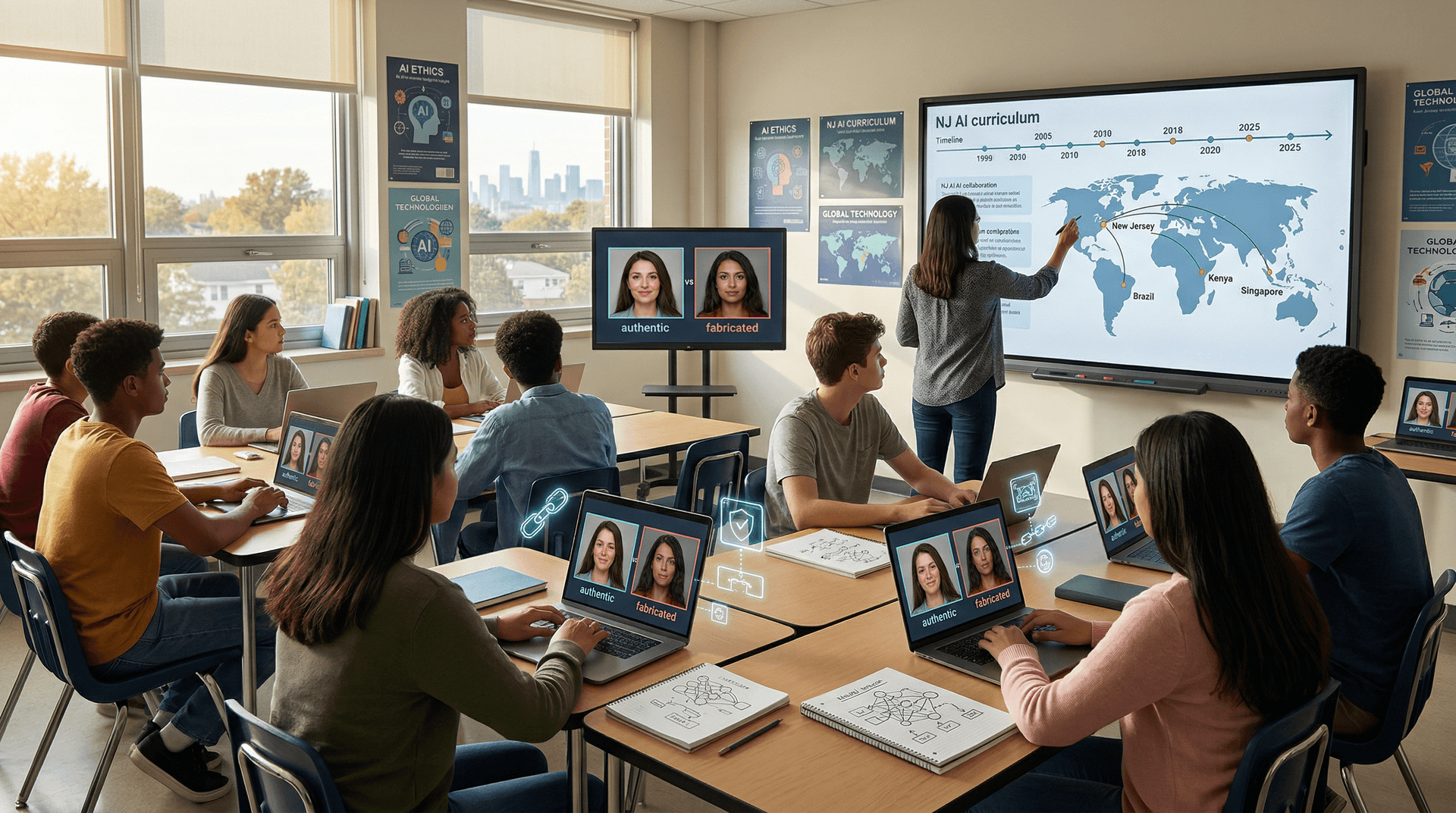
- $75M USD investment funds NJ AI curriculum for 1.4M K-12 students.
- Requires 20 hours of annual deepfake detection training per grade.
- Prepares 120,000 teachers using blockchain verification tools.
New Jersey unveiled the NJ AI curriculum with a $75 million USD investment on April 13, 2026. This initiative targets 1.4 million K-12 students and builds defenses against AI-generated deepfakes and misinformation.
Acting Commissioner Kevin Dehmer announced the plan at a Trenton press conference. Starting fall 2026, schools integrate AI literacy across all subjects.
A Rutgers University survey shows 68% of New Jersey teens encountered manipulated media last year.
NJDOE Allocates $75M USD Across NJ AI Curriculum Pillars
The NJDOE splits $75 million USD over three years from state budgets and federal grants. Teacher training claims $30 million USD, digital tools take $25 million USD, and student programs receive $20 million USD.
Dehmer stressed urgency amid AI's fast pace. "Students must verify digital content as blockchain-verified media surges," he said.
The NJ AI curriculum mandates 20 hours of annual AI detection training per grade. Schools roll out watermark detectors and blockchain provenance tools.
Blockchain firms bid for New Jersey contracts as the Crypto Fear & Greed Index hits 12, reports CoinDesk.
NJ AI Curriculum Tackles Digital Divides in Diverse State
New Jersey's 1.4 million students represent diverse backgrounds. Over 55% identify as non-white, including African, Asian, and Latin American communities.
Equity drives the curriculum. Urban districts like Newark and Paterson gain $10 million USD for multilingual AI tools.
Dr. Aisha Rahman, NJEA Director of Equity Initiatives, applauded the plan. "Immigrant students from Nigeria and India offer global media savvy. We leverage it to fight Western-centric AI biases," she said.
Venezuelan communities face 40% higher deepfake risks on social platforms, per Rahman.
NJDOE tapped Kenyan edtech leaders, who customized mobile AI checks for low-bandwidth zones.
Blockchain Powers AI Literacy Tools in NJ AI Curriculum
Students master deepfake detection with open-source AI models. Classrooms use Hugging Face detectors trained on diverse global datasets.
Blockchain ensures content permanence. Ethereum platforms timestamp student projects to prevent tampering.
Sarah Kim, Princeton AI Education Lead, backs the model. "NJ's AI-blockchain fusion teaches provenance to 1.4 million students," she said.
Pilots in 50 schools test XRP Ledger for issuing micro-credentials.
NJ AI Curriculum Prepares 120,000 Teachers with Cutting-Edge Training
New Jersey trains 120,000 teachers via summer workshops on prompt engineering and AI bias audits.
Funds procure 100,000 Chromebooks embedded with AI safeguards. Google adds Wired-reported safety features.
Educators from Edison's Asian American hubs demand modules tuned to Chinese state media deepfakes.
Dehmer forecasts 80% teacher readiness by September. Blockchain logs track certification progress.
Global Edtech Shapes Robust NJ AI Curriculum
New Jersey imports proven strategies. Singapore's AI ethics initiative cut student misinformation by 35%, per UNESCO.
Nigerian WhatsApp fact-checkers inspire modules for New Jersey's 300,000 smartphone-only households.
Brazilian experts share election deepfake tactics ahead of 2026 midterms.
Rahman highlighted diaspora roles. "African New Jersey students validate tools against homeland scams," she noted.
NJ AI Curriculum Ignites Edtech Finance Surge
Edtech funding slumps in Extreme Fear (Index 12), but state support draws BNB Chain innovators.
Analysts project $2 billion USD ROI by 2030 via a skilled workforce. Blockchain verifies diplomas for fintech roles.
Kim underscored protections. "Diverse training data averts AI pitfalls for minorities—New Jersey sets the standard."
NJ AI Curriculum Rollout Timeline and Goals
Fall 2026 deploys the NJ AI curriculum to all 2,500 schools. Annual audits target 75% deepfake detection proficiency.
NJDOE teams with TechCrunch-covered startups for adaptive tech.
Dehmer sets 90% district compliance goals. A June 15, 2026, budget review eyes expansions to boost global competitiveness.