
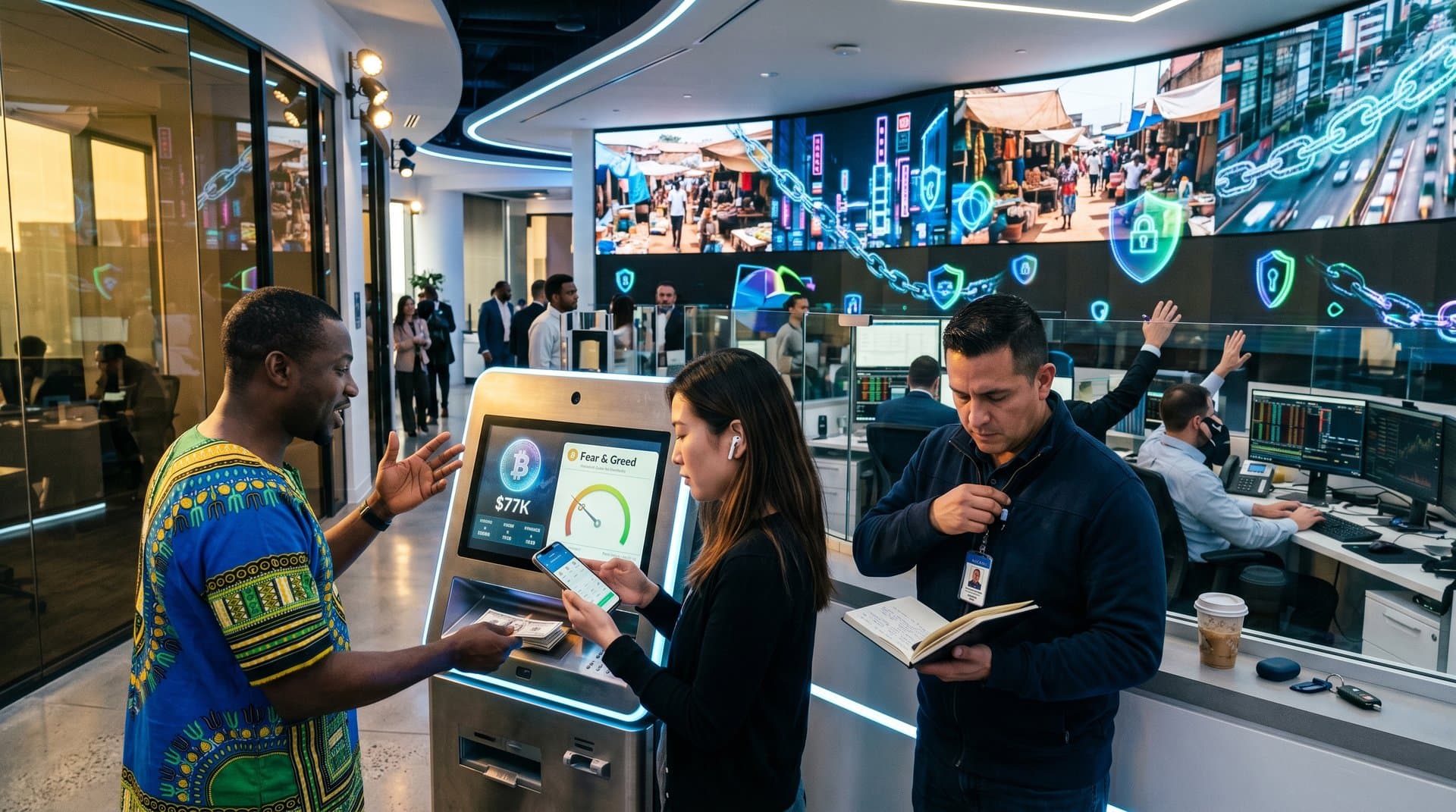
- 1. Minnesota advances crypto ATM crackdown to protect seniors from 20% fee scams.
- 2. Bitcoin reaches $77,034 with Fear & Greed at 26 amid regulatory pressures.
- 3. Global unbanked depend on ATMs; crackdowns risk limiting fintech access.
Minnesota lawmakers push the Minnesota crypto ATM crackdown to protect seniors from scams. KNSI reported on April 10, 2025, that complaints from elderly victims surged, with many losing life savings. These kiosks enable quick cash-to-crypto swaps without ID checks, according to CoinMarketCap data.
Bitcoin trades at $77,034, up 0.5% on April 10, 2025 (CoinMarketCap). Ethereum rises 2.1% to $2,324.14. The Fear & Greed Index hits 26, signaling fear (Alternative.me). XRP edges up 0.2% to $1.39.
Scammers Exploit Crypto ATMs to Target Seniors
Crypto ATMs convert cash to cryptocurrencies instantly, charging fees up to 20% per transaction (CoinDesk, December 5, 2023). Fraudsters phone seniors and push fake investments. Victims rush to kiosks and send funds through these high-cost machines.
Seniors often lack digital savvy, making them prime targets. Scammers pose as advisors. Minnesota follows New York and other states, per Reuters (February 20, 2024).
The Federal Trade Commission (FTC) issued warnings on elder fraud in 2024. CoinDesk highlighted a 25% rise in U.S. crypto ATM scam reports last year.
In Nigeria, Chainalysis' 2024 Crypto Crime Report shows ATMs support $2.5 billion in remittances despite $56.7 million in scams. Latin America's 50% unbanked population relies on kiosks amid Venezuela's 130% inflation (World Bank, 2024).
Crackdown Risks Limiting Unbanked Financial Access
Minnesota's crypto ATM crackdown removes kiosks from stores. Lawmakers focus on vulnerable groups like seniors. Critics warn it blocks low-income entry to blockchain finance (Consumer Financial Protection Bureau, 2024).
Immigrants use peer-to-peer transfers via ATMs. BNB climbs 0.5% to $626.02 (CoinMarketCap, April 10, 2025). USDT holds at $1.00 and leads ATM volumes at 65% (Chainalysis).
Regulated exchanges demand ID verification. India mandates KYC on rural kiosks, cutting scams by 40% (Reserve Bank of India, 2024). Kenya links ATMs to M-Pesa, serving 30 million users (GSMA, 2024).
Minnesota pilots regulated apps with geofencing. Blockchain's peer-to-peer nature challenges full enforcement.
Regulations Drive Shifts in Global Crypto Markets
Markets shrug off pressures. Bitcoin gains 0.5% to $77,034. Ethereum draws $1.2 billion in ETF inflows last week (Bloomberg, April 9, 2025).
Fear & Greed at 26 curbs buying frenzy. Traders eye U.S. elections and spot Bitcoin ETFs.
Reuters covered state-level actions against ATMs after scam spikes. Europe's MiCA rules launched December 30, 2024, requiring KYC for all operators (European Securities and Markets Authority).
Operators roll out app-based KYC and facial scans. XRP supports diaspora remittances at $1.39, with volumes up 15% in the Philippines (Ripple, Q1 2025).
Crypto ATMs connect cash users to DeFi. Bans push growth in centralized platforms like Coinbase, up 3% in stock price.
Fintech Innovates for Protection and Inclusion Worldwide
Minnesota's crypto ATM crackdown highlights key trade-offs. Seniors gain scam barriers. Unbanked groups risk barriers to finance.
Kenyan startups integrate ATMs with M-Pesa, processing $300 billion yearly (Central Bank of Kenya, 2024). India's UPI-linked kiosks slash fees to 1% (National Payments Corporation of India).
FINRA warned investors about ATM risks in a 2024 alert. Regulators in Brazil and South Africa test biometric verification.
On-chain tools from Elliptic track 90% of suspicious flows. Ethereum's Dencun upgrade cuts Layer 2 fees by 80%, aiding access (Ethereum Foundation, March 2025).
Policymakers worldwide refine rules. Minnesota sets U.S. precedents. Compliant platforms emerge as winners, fostering secure global finance amid rising adoption in Africa and Asia.
Frequently Asked Questions
What is the Minnesota crypto ATM crackdown?
Lawmakers advance banning crypto ATMs tied to senior scams, per KNSI on April 10, 2025. Focuses on anonymous high-fee kiosks.
Why target seniors with crypto ATM scams?
Scammers exploit no-KYC instant swaps. Seniors fall for fake investments, hit by 20% fees (CoinDesk).
How does it impact financial access?
Curbs unbanked blockchain entry. Nigeria and Kenya models add safeguards while preserving access (Chainalysis, GSMA).
What does it mean for crypto markets?
BTC holds $77,034 resiliently. Drives KYC tech; echoes Europe's MiCA for regulated fintech.