
By Aurora Dunn
April 12, 2026
The IC3 Report from the FBI, released April 12, 2026, reveals cryptocurrency investment scams caused $5.8 billion USD in losses during 2025. Scammers targeted 149,686 victims worldwide, including the US and emerging markets in Africa and Asia.
Investors filed 61% more complaints in 2025 than 2024, IC3 data shows. Blockchain hype drove this surge as scammers exploited retail enthusiasm.
IC3 Report Details Complaint Surge
Market volatility battered investors in 2025. Decentralized finance (DeFi) platforms sparked massive hype. Fraudsters impersonated fund managers and influencers to lure victims.
Nigerian trader Aisha Okonjo lost $45,000 USD to a fake DeFi yield farm promising 50% returns. She shared her story with Uchatoo. Lagos regulators now investigate similar schemes under Nigeria's SEC framework.
Brazilian developer Carlos Mendes lost $12,000 USD to a phishing site mimicking a major exchange. Brazilian media ignored Latin American risks, he noted. South America complaints rose 45%, IC3 data confirms.
Indian entrepreneur Priya Sharma lost 2 ETH ($4,388 USD at April 12 prices) in a rug-pull scam. She urges Asian regulators to mandate wallet security education.
Crypto Markets Show Extreme Fear
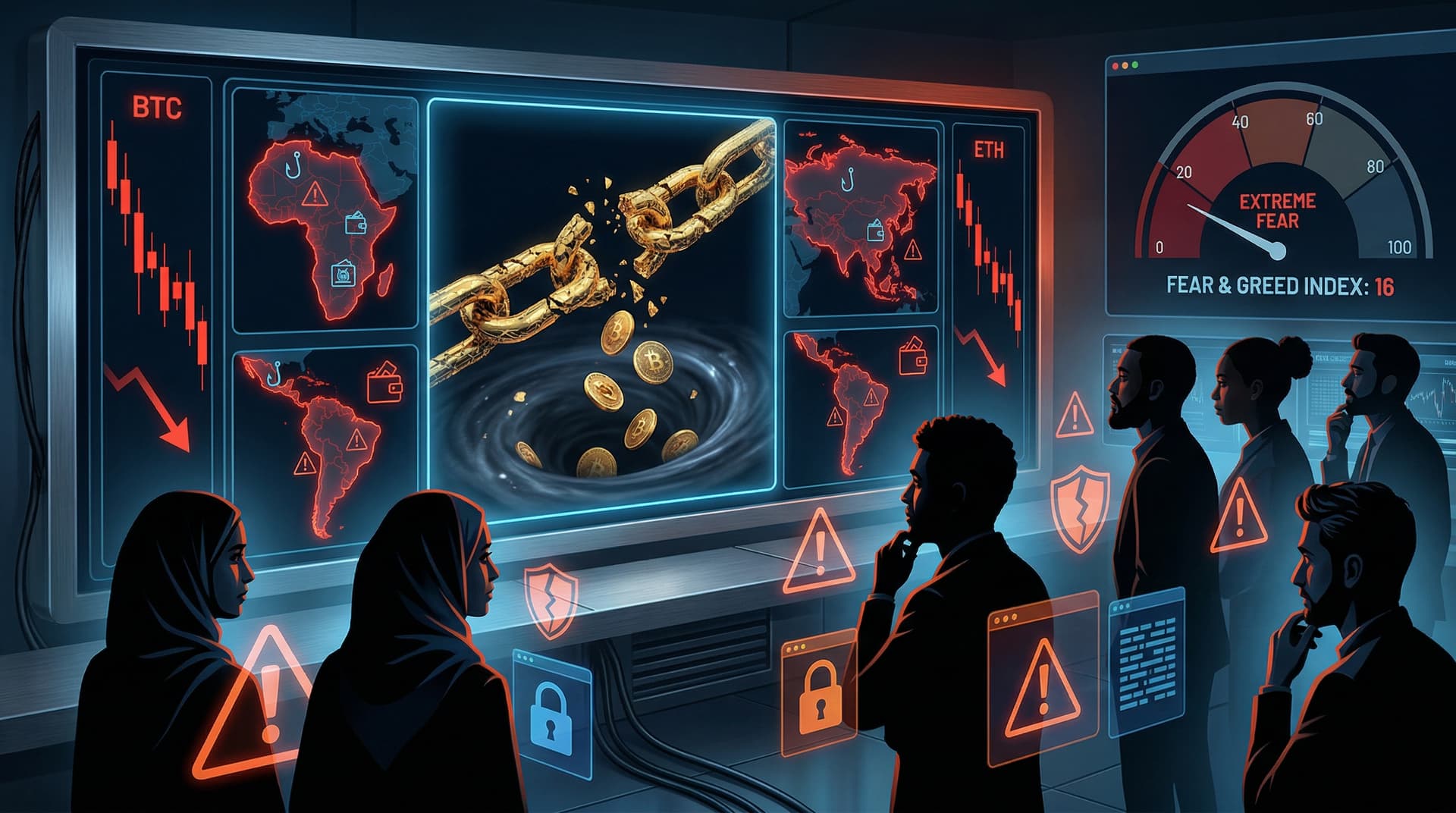
The Crypto Fear & Greed Index hit 16 on April 12, 2026, signaling extreme fear, per Alternative.me. Bitcoin traded at $70,882 USD, down 3.6%. Ethereum fell to $2,194.36 USD, down 4.8%.
USDT held steady at $1.00 USD. XRP dropped to $1.33 USD (down 2.6%). BNB reached $593.44 USD, off 2.9%, CoinMarketCap reports.
Scammers exploit this volatility. Blockchain pseudonymity hides their tracks. Faulty smart contracts lock funds forever, trapping victims.
IC3 Report Highlights Tech Weaknesses
Pig butchering scams topped losses, the IC3 Report notes. Fraudsters build trust over months via apps, then direct victims to fake blockchain sites.
Kenyan fintech expert Dr. Mwangi Kiptoo analyzes these tactics. Africa's mobile money boom offers entry points. Scammers target M-Pesa users through crypto bridges.
Southeast Asia Telegram groups push fake airdrops. Vietnamese investor Nguyen Van lost $8,500 USD. Local forums warned too late, he said.
Blockchain forensics firm Chainalysis tracked $3.2 billion USD in illicit flows in its April 2026 report. Investment scams accounted for 40%.
Emerging Markets Suffer Most
Non-US complaints made up 28% of totals, the IC3 Report states. Africa's share jumped 32%, fueled by youth using crypto for remittances and savings.
South African regulator Lerato Mthembu warns of copycat schemes. WhatsApp bots promise Bitcoin multipliers. Her office recovered $1.2 million USD last quarter via FSCA probes.
Latin America's unbanked chase blockchain access. Scams exploit them ruthlessly. Mexican victims reported $450 million USD losses, IC3 data shows.
Asian diaspora face family-targeted fraud. Scammers leverage cultural ties. Filipino OFWs lost $200 million USD, Bangko Sentral ng Pilipinas reports.
Finance Lessons from IC3 Report
Banks integrate blockchain for faster settlements. Retail investors chase high yields. The IC3 Report urges two-factor authentication and hardware wallets.
Singapore's MAS fined three exchanges $11 million USD for lax controls. They missed suspicious trades. Global FATF Travel Rule standards close these gaps.
DeFi protocols ramp up audits. Uniswap logged zero exploits in 2025. Smaller chains lag, DefiLlama data reveals.
Indonesian investors flock to Tokocrypto apps with built-in scam alerts. Adoption soared 150% post-scam spikes, OJK regulators note.
Protecting Users from Blockchain Scams
Regulators prioritize education. The SEC launches crypto scam hotlines by June 2026. International task forces share blockchain traces across borders.
African Union deploys AI-powered alerts. The system scans scam wallets continent-wide. Nigeria's pilot blocked 500 frauds already.
Experts push insured wallets. Ledger offers $50,000 USD coverage. Deloitte forecasts 40% loss reductions with wider adoption.
Path Forward After IC3 Report
Blockchain promises financial sovereignty. Scams undermine this vision. Investors should verify projects on Etherscan before committing funds.
EU MiCA rules debut July 2026, demanding transparency. Emerging markets draft similar frameworks. The IC3 Report's Q2 2026 update will track evolving trends.