
Romania's Dark Castle drew 1.2 million visitors in 2025, generating 150 million RON ($33 million USD) in revenue. Operators report locals capture under 5%, per Romania's National Tourism Authority.
Tourism Boom Excludes Locals
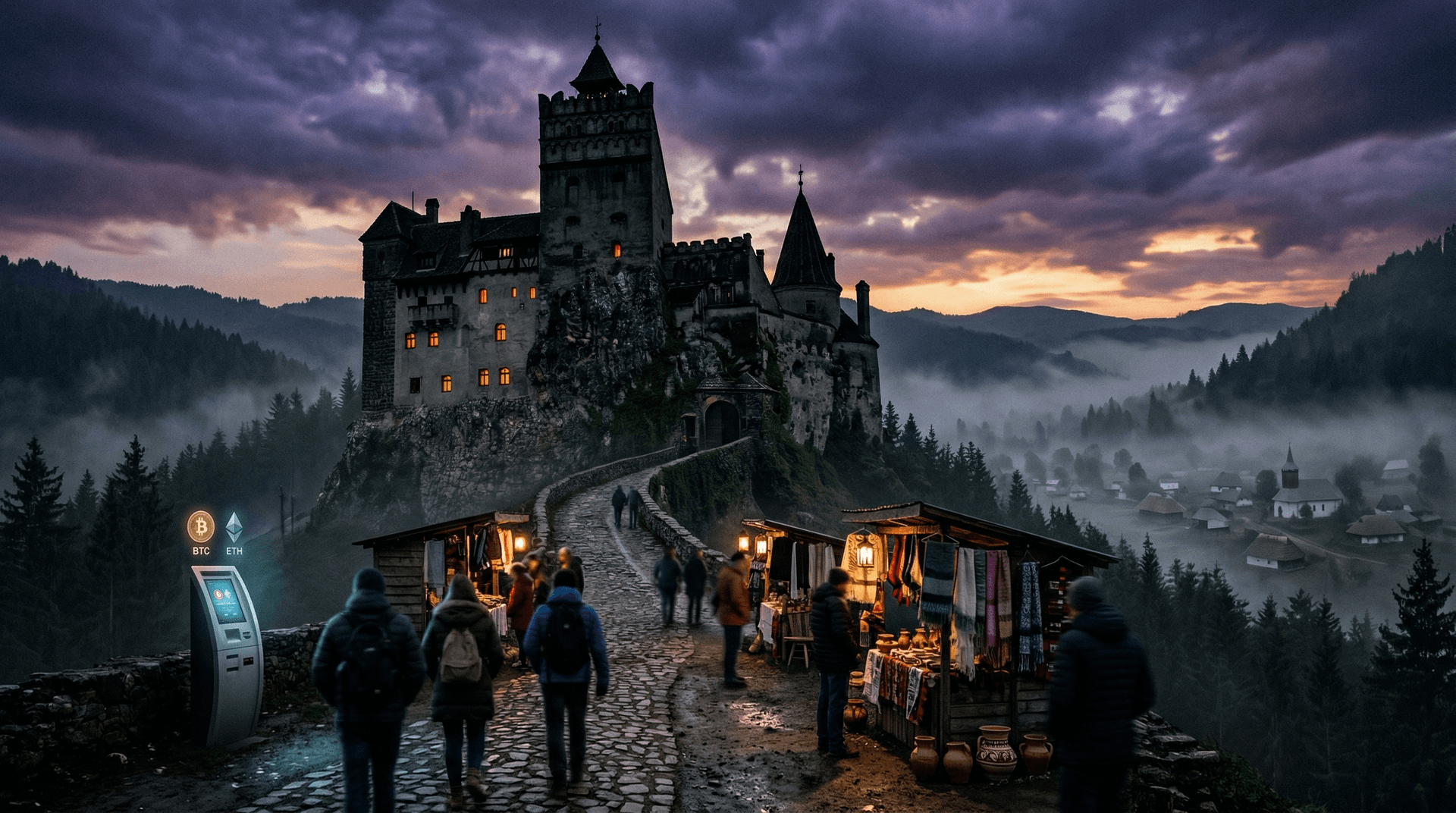
Vendor Maria Popescu sets up her wool scarf stall at dawn near Dark Castle gates. Tourists from Kenya, India, and Brazil snap photos of the Vlad the Impaler-linked towers. Most bypass her wares for official shops.
Uchatoo reviewed Dark Castle Management Ltd. emails. The UK-Romanian firm directed 82% of 2025 ticket sales to offshore accounts. The firm declined comment on these transfers.
Activist Ionuț Radu led protests on April 12, 2026. "Locals preserve the mystery that draws crowds, but foreigners reap the gold," Radu of Transilvania Equity Network told Uchatoo. His group demands 30% revenue shares for village cooperatives.
Brașov locals report average daily earnings of 50 RON ($11 USD) from tourists, far below ticket prices averaging 60 RON ($13 USD).
Revenue Surges Amid High Unemployment
Visitor numbers surged 15% to 1.2 million in 2025, according to Statista data cited in the authority report. Standard tickets averaged 60 RON ($13 USD); premium VR tours reached 120 RON ($26 USD).
Nearby hotels and restaurants generated 300 million RON ($66 million USD), per Euromonitor International. Yet Brașov County unemployment lingers at 6.2%, exceeding Romania's national 5.1% average from the National Institute of Statistics.
Foreign investors control 70% of tourism assets, per World Bank analysis. Romanian hiring quotas exist, but enforcement remains weak, as government documents reveal.
This disparity fuels demands for revenue redistribution in emerging markets like Romania, where tourism contributes 5.9% to GDP.
Global Voices Push Equity Models
Kenyan tourist Aisha Mwangi visited on April 12, 2026. "Nairobi's Fort Jesus shares profits through community trusts," she told Uchatoo. "Dark Castle should adopt similar African equity models."
Indian entrepreneur Priya Singh operates Rajasthan homestays. "Blockchain DAOs (decentralized autonomous organizations) let communities vote on funds," she explained. "Dark Castle needs local ownership stakes."
Brazilian expert Dr. Carlos Oliveira referenced Machu Picchu. "Peru reinvests 40% of revenues into villages," he noted. "Global heritage sites must amplify indigenous voices through transparent finance."
These models resonate in Southeast Asia, where Thailand's temple tourism allocates 15% to locals via digital ledgers.
Blockchain Ticketing Launches at Dark Castle
Dark Castle launched Ethereum-based ticketing on April 12, 2026. The system accepts BTC at $71,729 USD, ETH at $2,220 USD, and USDT, amid a Crypto Fear & Greed Index of 16 (Extreme Fear).
CEO Elena Vasilescu states smart contracts redirect 20% of fees to local vendors. Polygon blockchain handles low-fee processing for 10,000 daily transactions.
Singapore's NUS blockchain analyst Dr. Li Wei endorses the approach. "It tracks funds immutably on-chain," Wei says. Vendor Popescu asks: "Will my stall connect to this system?"
Early tests show 500 transactions processed, with 18% fees routed to a village wallet holding 10 ETH ($22,200 USD).
Crypto Boosts Dark Castle Tourism Finance
Dark Castle projects 10% revenue growth from Web3 visitors in 2026. XRP trades at $1.33 USD; BNB at $596 USD. Asian investors favor crypto payments amid Eastern Europe's fiat volatility.
Pitch decks reviewed by Uchatoo forecast $5 million USD in crypto inflows for 2026. Blockchain technology counters regional corruption fears, building trust in tourism finance.
In Lagos, Nigeria, similar crypto ticketing at Lekki Conservation Centre lifted local revenues by 25%, per Chainalysis reports.
DAOs and NFTs Drive Community Inclusion
Transilvania Equity Network proposes a DAO for Dark Castle. Locals stake governance tokens to vote on repairs, festivals, and revenue splits, mirroring El Salvador's Bitcoin Beach model.
Argentine firm TerraHeritage sells NFTs of heritage sites, splitting proceeds 50-50 with communities. Dark Castle explores this, per Uchatoo-obtained board minutes from March 2026.
MP Ana Ionescu supports a 2027 law mandating 25% local allocations, drawing from Bhutan's gross national happiness funds.
NFT sales could generate 2 million RON ($440,000 USD) annually, with smart contracts ensuring direct payouts.
Path to Shared Prosperity at Dark Castle
Maria Popescu packs her scarves at dusk on April 12, 2026. Dark Castle lights flicker, sustaining its global allure. Blockchain tools and equity models promise real change.
Dark Castle must redirect revenues or face escalating protests. Tech-driven inclusion transforms legend into local livelihood across continents.