
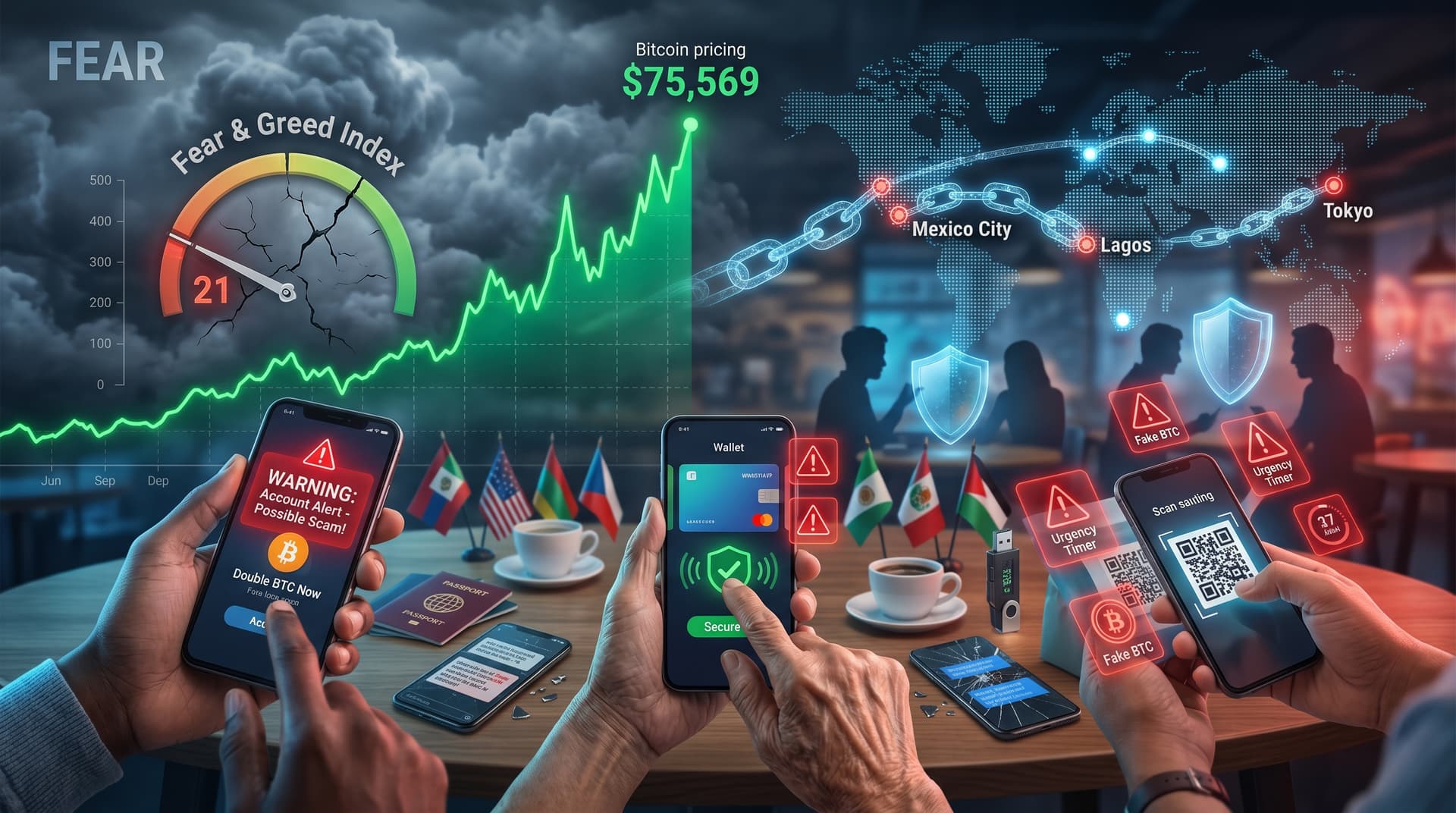
- 1. Fear & Greed Index at 21 drives crypto scams surge targeting immigrants and seniors.
- 2. Bitcoin surges to $75,569 USD (up 5.2%), yet fake schemes promise even higher gains.
- 3. Global users fight back with hardware wallets, on-chain checks, and community intel.
By Aurora Dunn April 14, 2026
Crypto scams surge worldwide on April 14, 2026, as the Fear & Greed Index hits 21. This sentiment gauge—from 0 (extreme fear) to 100 (extreme greed)—signals panic. Scammers target immigrants and seniors in emerging markets.
Bitcoin trades at $75,569 USD, up 5.2% per CoinGecko data. Ethereum rises 7.3% to $2,368.83 USD. Volatility fuels fraud despite rebounds.
Fear & Greed Index Plunge Sparks Global Scam Wave
The Fear & Greed Index stands at 21, according to Alternative.me metrics. Panic selling creates opportunities for fraudsters. Fake recovery services spread across Asia, Latin America, and Africa.
Investors in Nairobi and São Paulo report phishing attacks. Bitcoin's price tempts false high-return promises. USDT remains stable at $1.00 USD.
Chainalysis reports $1.7 billion USD lost to scams in 2025. Emerging markets bore the brunt, with Africa seeing 28% of incidents.
Red Flags Target Immigrants and Seniors
Fraudsters promise gains exceeding Bitcoin's 5.2% rise. They push urgency to bypass checks. Fake websites mimic exchanges like Binance.
Victims share wallet seeds unwittingly. The U.S. SEC warns of URL tricks in alerts. Always verify domains manually.
Recovery scams demand upfront fees. Cross-check claims with official sources. Hardware wallets prevent seed exposure.
Remittance Fraud Hits African Diaspora Hard
Immigrants send $700 billion USD in remittances yearly, per World Bank figures. Scammers pose as cheap crypto apps. African users face pig-butchering tactics.
Fraudsters build relationships online. Then they solicit large transfers. Blockchain explorers like Etherscan reveal fake transactions.
Nigeria's Central Bank (CBN) issues alerts on cloned apps. BNB climbs 3.5% to $624.73 USD. Latin American remitters report similar cloned apps for quick sends.
Seniors Battle Phishing in Crypto Boom
Seniors turn to crypto for retirement boosts. Impostors call posing as support. They request screen shares to install malware.
European and Asian elders face language hurdles. Malware drains wallets remotely. The UK's Financial Conduct Authority (FCA) flags elder-targeted phone scams.
Hardware wallets like Ledger block remote access. Store seeds offline in secure spots. XRP gains 3.5% to $1.38 USD amid bogus airdrop traps.
Blockchain Defenses Empower Global Users
Multi-signature wallets demand multiple approvals. Hardware 2FA outperforms SMS codes. Scan transactions on explorers like Blockchain.com.
Ethereum's $2,368.83 USD volume confirms legitimacy. African forums on Telegram share scam lists. Asian communities host verification workshops.
Latin American groups use WhatsApp for intel. Collective vigilance cuts losses by 40%, per regional studies.
Volatility Fuels Scams in Emerging Markets
Fear & Greed at 21 aligns with scam peaks historically. Bitcoin's $75,569 USD rally draws greed-based traps. Hold USDT for stability during dips.
Southeast Asia sees DeFi rug pulls rise. Mobile money users in Lagos integrate crypto cautiously. Regulators demand better KYC globally.
CoinDesk outlines tactics like pump-and-dump schemes.
Building Resilience Across Cultures
Diasporas run scam simulations in community centers. Seniors join crypto meetups to analyze pitches. Practice on testnets builds skills.
Fear & Greed at 21 warns of persistent risks. Asian regulators like Singapore's MAS mandate disclosures. Ethereum's 7.3% rise underscores market potential.
Global cooperation via Interpol strengthens enforcement. Crypto scams surge may ease as fear fades, but vigilance endures.