- 1. Duane Morris maps crypto kiosk regulation variations across US states.
- 2. Bitcoin reaches $75,780 USD with Fear & Greed Index at 26.
- 3. Strict state rules widen digital finance gaps for 4.5% unbanked US households.
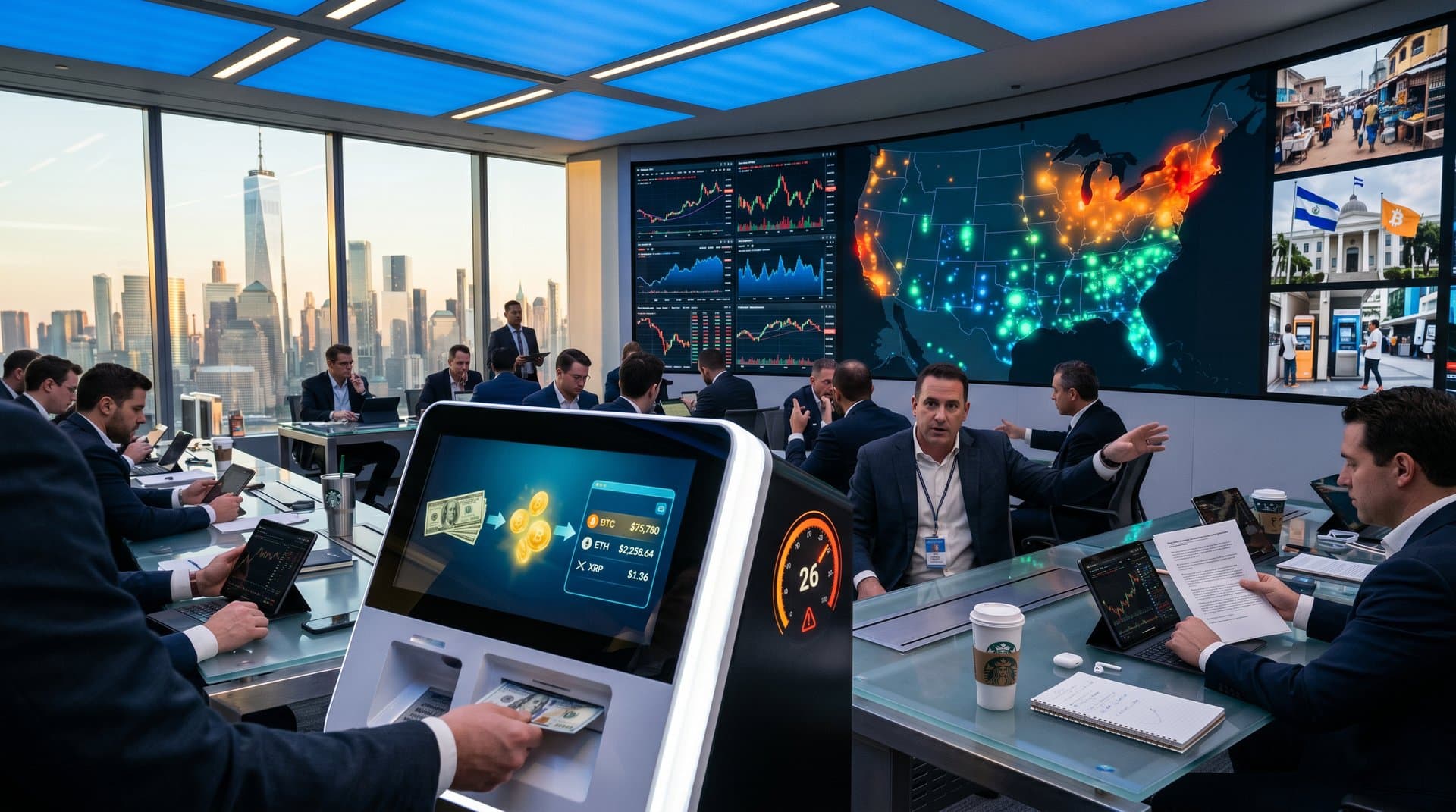
Duane Morris Government Strategies maps reveal crypto kiosk regulation varies widely across US states. The rules reshape access to virtual currencies. Bitcoin hit a $75,780 USD peak on October 15, 2024. The Fear & Greed Index stands at 26, per CoinGecko.
Ethereum dropped 1.3% to $2,258.64 USD. XRP fell 1.4% to $1.36 USD. Cash-to-crypto kiosks now face stronger anti-money laundering (AML) scrutiny. Market pressures intensify these demands.
State Variations in Crypto Kiosk Regulation
New York requires strict BitLicense approvals for kiosks. The New York Department of Financial Services (DFS) issued guidance on May 15, 2024. Texas uses lighter money transmitter licenses from the Texas Department of Banking. These enable quick deployments.
California demands money transmitter licenses plus $500,000 surety bonds. The California Department of Financial Protection and Innovation oversees this. Florida mandates monthly transaction reports to the Office of Financial Regulation. It sets fewer upfront barriers. Duane Morris compiles these into interactive state maps for operators.
Users buy Bitcoin or Ethereum with cash at kiosks. Transactions fund digital wallets instantly. Fees average 10-20%. Fraud risks hit $1.2 billion in 2023, per the Chainalysis 2024 Crypto Crime Report. Operators add KYC facial scans and ID checks for federal FinCEN compliance.
Strict Rules Skew Kiosk Deployment and Unbanked Access
High-compliance states like New York and California host fewer kiosks per capita. They average 1.2 machines per 100,000 residents. Permissive states like Florida average 4.5, per Duane Morris data. Operators focus on low-regulation zones. This limits rural and unbanked access.
Fragmentation widens digital finance gaps. The US has 4.5% unbanked households, per the Federal Deposit Insurance Corporation's 2021 survey. Kiosks connect cash to DeFi platforms like Uniswap. Compliance costs rose 25% year-over-year. Bitcoin holds near $75,780 USD.
USDT pegs at $1.00 USD. BNB dipped 0.9% to $618.02 USD. Solana fell 2.1% to $142.50 USD, per CoinMarketCap data on October 15, 2024.
Global Contrasts Highlight US Crypto Kiosk Fragmentation
Nigeria operates over 1,500 kiosks for remittances. The Central Bank of Nigeria applies light oversight to boost inclusion, per GSMA's 2024 Mobile Money report. El Salvador deploys 200+ kiosks in its national Bitcoin strategy since 2021.
US state silos block scale. Emerging markets use unified mobile KYC. This cuts costs by 40%. US operators use AI-driven KYC from Onfido and blockchain oracles for compliance.
Thailand regulates kiosks under one Bank of Thailand framework. It supports 10,000+ machines. Global efforts aid 1.7 billion unbanked people, per the World Bank Findex 2021.
User and Market Impacts from Patchwork Regulation
New York fees reach 25%. Texas fees stay at 8%. Strict rules delay conversions by days. Permissive states handle 70% of national volume, per Coin ATM Radar.
Fear & Greed at 26 tempers retail demand. Bitcoin tests $75,780 USD support. Ethereum sits at $2,258.64 USD. XRP at $1.36 USD shows regulatory sensitivity.
Investors access premium-priced entry via kiosks in volatility. Bitcoin ETFs hold $50 billion as of October 2024, per Bitwise Asset Management.
Path Forward for Unified Crypto Kiosk Regulation
Congress considers the Clarity for Payment Stablecoins Act. It eyes EU MiCA rollout by 2026. Duane Morris predicts federal reciprocity cuts costs 30%.
Operators push for preemption. Coinbase teams with Bitcoin Depot. Scams dropped 24% in Q3 2024, per Chainalysis. Federal clarity expands access. It stabilizes Bitcoin above $75,780 USD and drives global digital finance.
Frequently Asked Questions
What drives crypto kiosk regulation variations?
States combat scams with licensing: New York's BitLicense or Texas' lighter rules, per Duane Morris and DFS guidance. Bitcoin at $75,780 USD adds market pressure.
How do state laws affect crypto kiosk deployment?
Strict rules limit kiosks to 1.2 per 100,000 in high-compliance states vs. 4.5 in permissive ones, per Duane Morris, widening unbanked access gaps.
Why does US crypto kiosk regulation lag global peers?
Nigeria and El Salvador deploy kiosks rapidly for inclusion with unified rules. US fragmentation raises costs 25%, per GSMA and World Bank data.
What federal changes could unify crypto kiosk regulation?
Stablecoin bills post-EU MiCA may preempt states, cutting costs 30% per Duane Morris. This boosts access as BTC stabilizes at $75,780 USD.