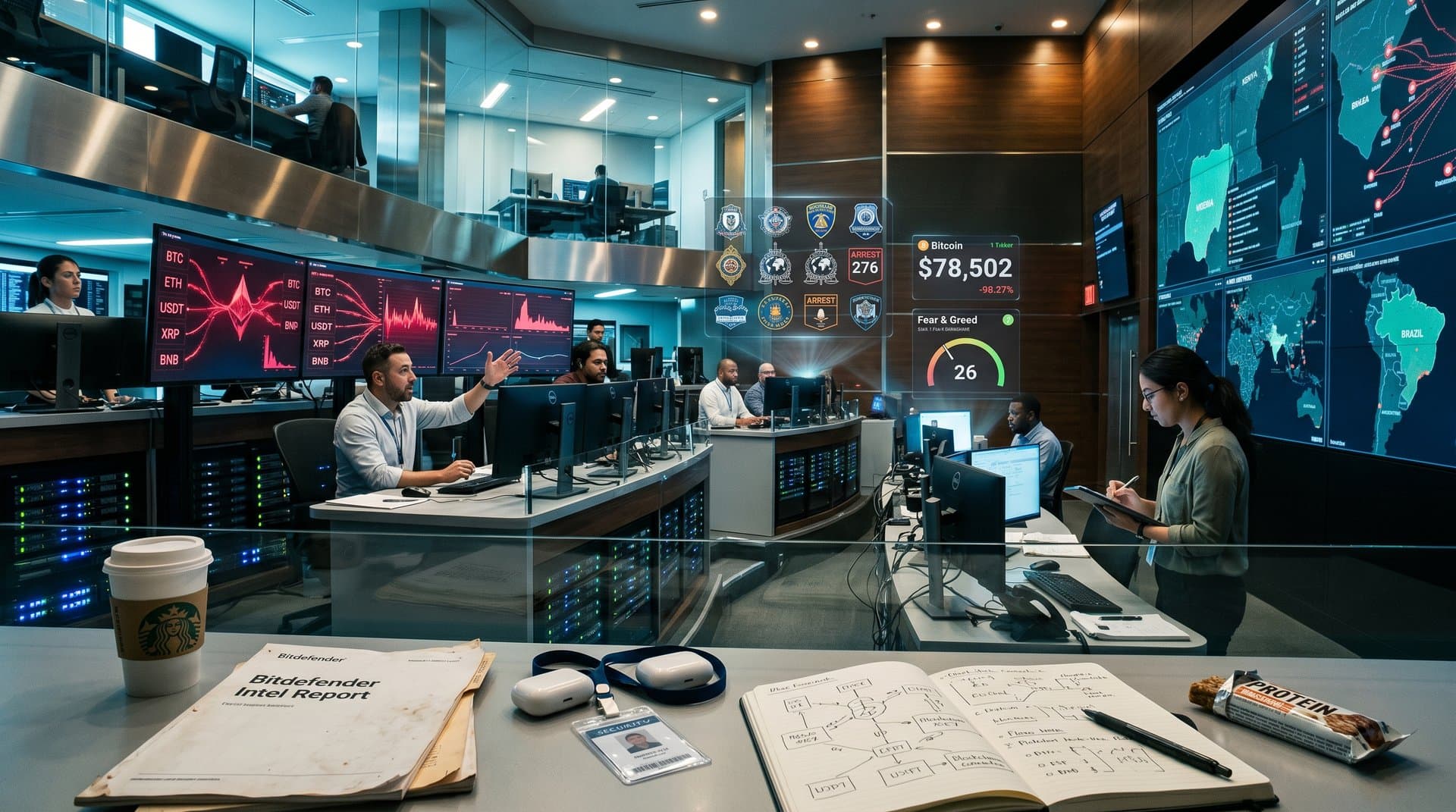

- 1. Bitcoin price reaches $78,012 USD, up 4.2% on April 17, 2026.
- 2. Fear & Greed Index drops to 21, often preceding market rallies.
- 3. Ethereum surges 4.5% to $2,449.69 USD alongside altcoin gains.
Bitcoin price surges 4.2% to $78,012 USD on April 17, 2026. Alternative.me registers the Fear & Greed Index at 21, indicating extreme fear. Ethereum advances 4.5% to $2,449.69 USD. XRP climbs 4.3% to $1.49 USD.
BNB rises 3.0% to $644.66 USD. USDT holds steady at $1.00 USD. CoinGecko provides these real-time prices. On-chain metrics show heightened activity from institutional ETF inflows, per Glassnode data.
Investors in emerging markets across Africa and Asia position Bitcoin as an inflation hedge. Traders monitor these indicators amid global regulatory shifts. James Check, Head of Insights at Glassnode, observes, "Active addresses surged 12% week-over-week, signaling renewed global interest."
Bitcoin Price Defies Fear & Greed Index at 21
Bitcoin's proof-of-work blockchain processes transactions securely. Miners confirm blocks roughly every 10 minutes. The April 2024 halving reduced rewards to 3.125 BTC per block, with 19.7 million BTC now in circulation.
Kwesi Boateng, Ghanaian fintech analyst at Accra Digital Finance Hub, notes, "Fear & Greed scores below 25 historically trigger rallies, as seen in emerging markets during 2021." Low readings like 21 have often preceded price surges by 300% or more within months, according to historical data from Alternative.me.
Latin American traders reference the 2021 peak above $69,000 USD. Regional inflation rates exceeding 50% annually in countries like Venezuela and Argentina drive demand for Bitcoin as digital gold.
Ethereum's proof-of-stake, implemented post-Merge in September 2022, cuts energy consumption by 99.99%, per the Ethereum Foundation. DeFi protocols attract users worldwide, with total value locked surpassing $100 billion USD again this quarter.
Emerging Markets Drive Bitcoin Price Momentum
Sub-Saharan African platforms integrate USDT at $1.00 USD for seamless cross-border transfers. Users evade local currency volatility in nations like Nigeria and Kenya.
Maria Gonzalez, Buenos Aires-based economist at LatAm Crypto Research, states, "Bitcoin acts as digital gold for Argentinians facing 200% inflation; the $78,012 USD level unlocks real wealth creation."
EU's MiCA regulation, effective January 2026, standardizes crypto protections across 27 nations. African exchanges listed under MiCA gain credibility, boosting XRP traders at $1.49 USD with clearer rules.
India's Lightning Network supports microtransactions in satoshis, costing fractions of a cent. Financial inclusion expands for 1.4 billion people, with adoption rates climbing 40% year-over-year per Chainalysis.
- Asset: BTC · Price (USD): 78,012.00 · 24h Change: +4.2%
- Asset: ETH · Price (USD): 2,449.69 · 24h Change: +4.5%
- Asset: USDT · Price (USD): 1.00 · 24h Change: +0.0%
- Asset: XRP · Price (USD): 1.49 · 24h Change: +4.3%
- Asset: BNB · Price (USD): 644.66 · 24h Change: +3.0%
CoinMarketCap confirms these figures. Altcoins track Bitcoin price closely during fear-driven recoveries.
Environmental Concerns Shadow Bitcoin Price Surge
Proof-of-work mining consumes significant electricity, equivalent to Argentina's annual usage, per Cambridge Centre for Alternative Finance data. Kenyan solar-powered farms offset emissions and supply 15% of regional hashrate.
Li Wei, Singapore-based sustainability expert at GreenChain Asia, warns, "Bitcoin miners must shift to renewables; hydro and solar in Africa show the path forward with over 50% clean energy mixes."
Post-halving, hashrate transparency becomes essential. Ethereum's model influences industry standards, prompting miners in Zambia and Ethiopia to adopt hydro power.
African hydroelectric miners pioneer green practices. Wealth generation balances climate imperatives, with carbon-neutral operations growing 25% per BitOoda reports.
U.S. SEC ETF approvals set global benchmarks. Compliance averts regulatory hurdles in Asia and Europe, encouraging institutional flows into Bitcoin price rallies.
Global Adoption Fuels Bitcoin Price Opportunities
Nigerian traders use Bitcoin for remittances, preserving value at $78,012 USD. Peer-to-peer platforms bypass capital controls, handling $400 million USD monthly per Chainalysis.
Southeast Asian users access BNB Chain for DeFi yields under 1% fees. Accessibility grows in Indonesia and Vietnam, where mobile wallets dominate.
Latin American families rely on XRP for instant remittances at $1.49 USD. Bankless inclusion accelerates, with remittances surpassing $10 billion USD annually.
Volatility remains a risk. Extreme fear at 21 prompts measured positioning, yet long-term holders benefit from historical patterns.
Regulatory Tailwinds Support Bitcoin Price Growth
BlackRock's ETF expansions draw institutional capital exceeding $20 billion USD inflows. Retail platforms like Coinbase onboard millions in emerging regions.
Bitcoin Layer-2 solutions boost transaction speeds to 1,000 TPS. Ethereum's Dencun upgrade slashes Layer-2 fees by 90%, per Ethereum Foundation metrics.
Carbon credit-linked green mining gains traction. Underserved regions lead adoption rates, with Sub-Saharan Africa at 1,200% year-over-year growth per Chainalysis.
Bitcoin price reflects maturing infrastructure across diverse global regulatory frameworks. Emerging markets accelerate this trend, positioning crypto for sustained growth.
Frequently Asked Questions
What is the current Bitcoin price?
Bitcoin price stands at $78,012 USD on April 17, 2026, up 4.2%. Fear & Greed Index at 21 tempers the rally amid broader crypto gains.
Why does Fear & Greed Index hit 21 during Bitcoin price rally?
Index at 21 reflects extreme fear from volatility. Such lows often precede surges, as Latin American investors note from past cycles.
How does Bitcoin price impact Ethereum and XRP?
Ethereum rises 4.5% to $2,449.69 USD. XRP gains 4.3% to $1.49 USD. Altcoins mirror Bitcoin price momentum.
What global factors drive Bitcoin price today?
African remittances, Asian DeFi, Latin inflation hedges fuel demand. MiCA rules boost EU confidence since January 2026.