
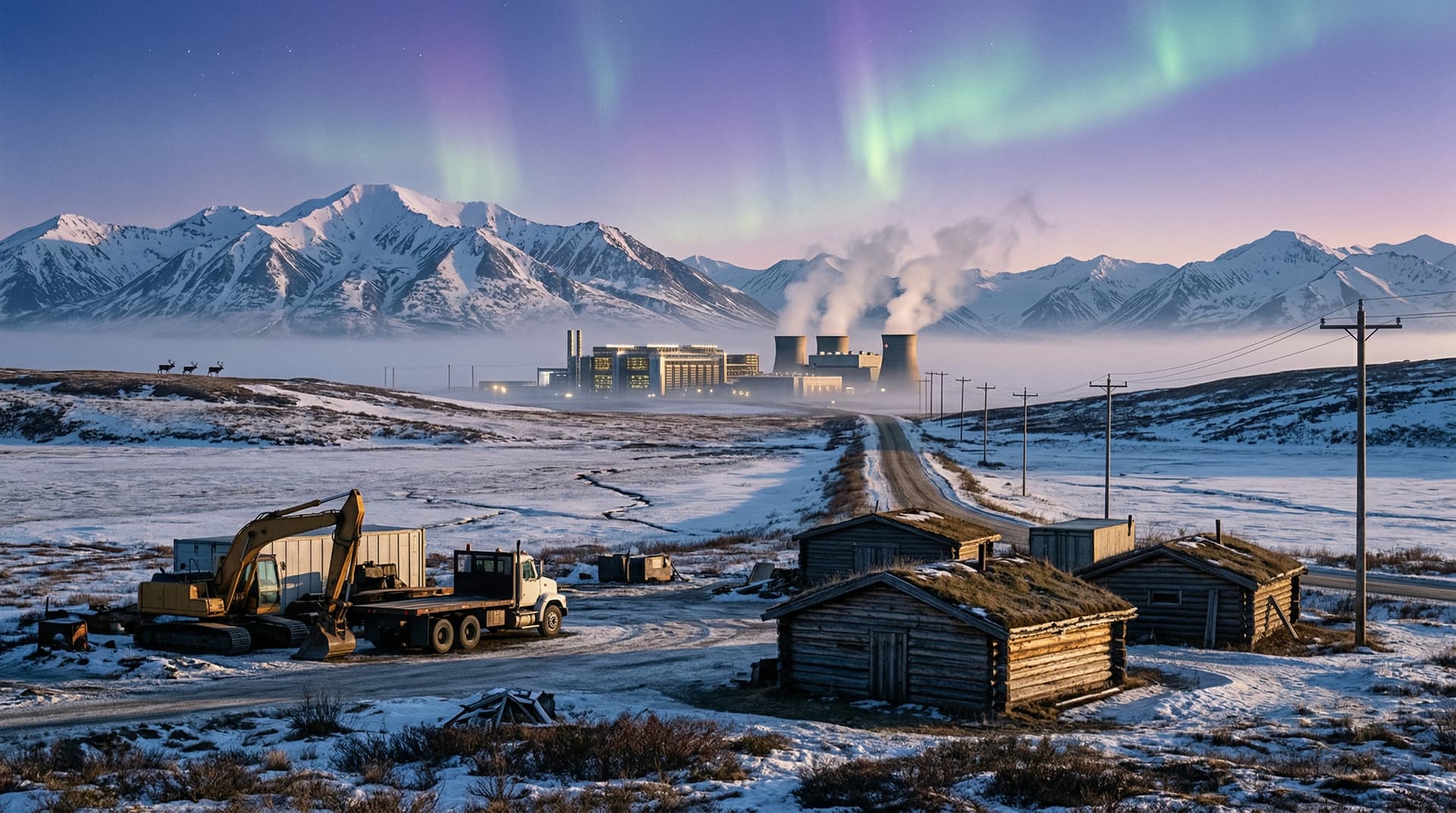
The Department of the Air Force announced initial steps on April 11, 2026, for Alaskan AI data centers. Officials target strategic Arctic computing power. The initiative harnesses Alaska's cold climate for efficient operations.
Col. Elena Ramirez, Department spokesperson, issued a request for information to industry partners. Sites near Eielson Air Force Base lead contenders. Planners prioritize subzero temperatures for low-cost cooling.
Fairbanks North Star Borough Mayor Leah Weinstein hailed the economic boost. She forecasts 500 construction jobs in phase one.
Air Force Arctic Strategy
Air Force leaders position Alaskan AI data centers at the heart of Arctic dominance efforts. Russia and China ramp up military AI presence there. U.S. commanders demand parity through local data processing.
Gen. David Clark, Pacific Air Forces commander, told Congress in March 2026 that AI models require massive compute clusters. Alaska's remoteness demands on-site infrastructure to cut latency.
The project draws from the Pentagon's $2.5 billion USD AI budget for 2026, per Defense Department documents. Hyperscale facilities target exaflop-scale processing power.
Yup'ik leader Noah Charles from Bethel stated on April 11, "Our lands supply the power sources. Include us in benefits."
Economic Impact on Alaskan Communities
Supporters highlight job creation. Alaska Department of Labor projects 1,200 permanent roles upon operations start. State analysts predict average salaries of $120,000 USD yearly.
Anchorage Chamber of Commerce President Mia Torres noted strong supplier interest. Local businesses tie it to surging tech investments across the state.
Alaska Permanent Fund managers plan $1 billion USD in infrastructure bonds by 2028. Investors draw parallels to crypto mining's pivot toward reliable AI revenue streams.
Cambridge Centre for Alternative Finance data reveals Iceland's mining farms consumed 1.5 GW last year. AI centers promise steadier financial returns with long-term contracts.
Environmental Risks Ignite Debate
Critics highlight permafrost thaw dangers. A DAF assessment estimates initial power needs at 500 MW. This strains hydro- and gas-powered grids.
Greenpeace Alaska coordinator Lila Voss warned on April 11 of heat emissions. "Efficient AI chips still warm the tundra," she said. Models predict accelerated ice melt.
Iñupiat elders from Utqiaġvik cited wildlife disruptions. Spokesperson Eben Whittey highlighted caribou migration threats from new power lines.
University of Alaska Fairbanks Dr. Sanjay Patel's team forecasts a 15 percent local CO2 emissions rise without mitigation measures.
Technology Demands for Alaskan AI Data Centers
Facilities require NVIDIA H100 GPUs at 700W each. Full racks reach 100 kW, per specifications. Liquid cooling loops play a key role.
Subzero air slashes cooling costs 40 percent versus Texas sites, according to a 2025 Lawrence Berkeley National Lab study. Air Force engineers spearhead designs.
Chugach Electric Association supplies 80 percent hydro power. Plans add 200 MW geothermal capacity from Akutan Volcano.
Firms like Core Scientific pivot from mining to AI hosting. They lease 800 MW Texas capacity at $0.05 USD per kWh to hyperscalers.
Inclusive Community Engagement
Bethel hosted a town hall on April 10 with 200 residents. Yup'ik and Athabascan groups demand revenue shares.
Nunavut leaders secured 20 percent equity in a 2024 Google data center, per public records. Finnish Sami herders earn €5 million EUR yearly from Equinix co-management deals.
Russia's Yamal LNG sites achieve only 60 percent efficiency, per Rosatom reports. Col. Ramirez pledges 30-day feedback loops and indigenous advisory boards.
Global Finance and Tech Implications
Greenland officials study Alaska's model to build their own AI hubs and attract investments. Sequoia Capital eyes $500 million USD funding rounds for cold-climate AI infrastructure startups.
Norway's Arctic data centers run on 90 percent renewables, per grid operator Statnett, drawing sovereign wealth funds. Finland's models yield 25 percent higher ROI than equatorial sites due to energy savings.
University of Alaska Fairbanks launches AI training programs targeting 40 percent local hires. Global investors view Alaskan projects as blueprints for $10 billion USD in polar tech financing by 2030.
Path Forward
DAF initiates site surveys in May 2026. Bids open June 1. Environmental impact statements arrive in September.
Mayor Weinstein schedules quarterly updates. Elders demand binding revenue agreements. The RFP release for Alaskan AI data centers will shape America's Arctic AI frontier.