
April 12, 2026 By Christine Yates
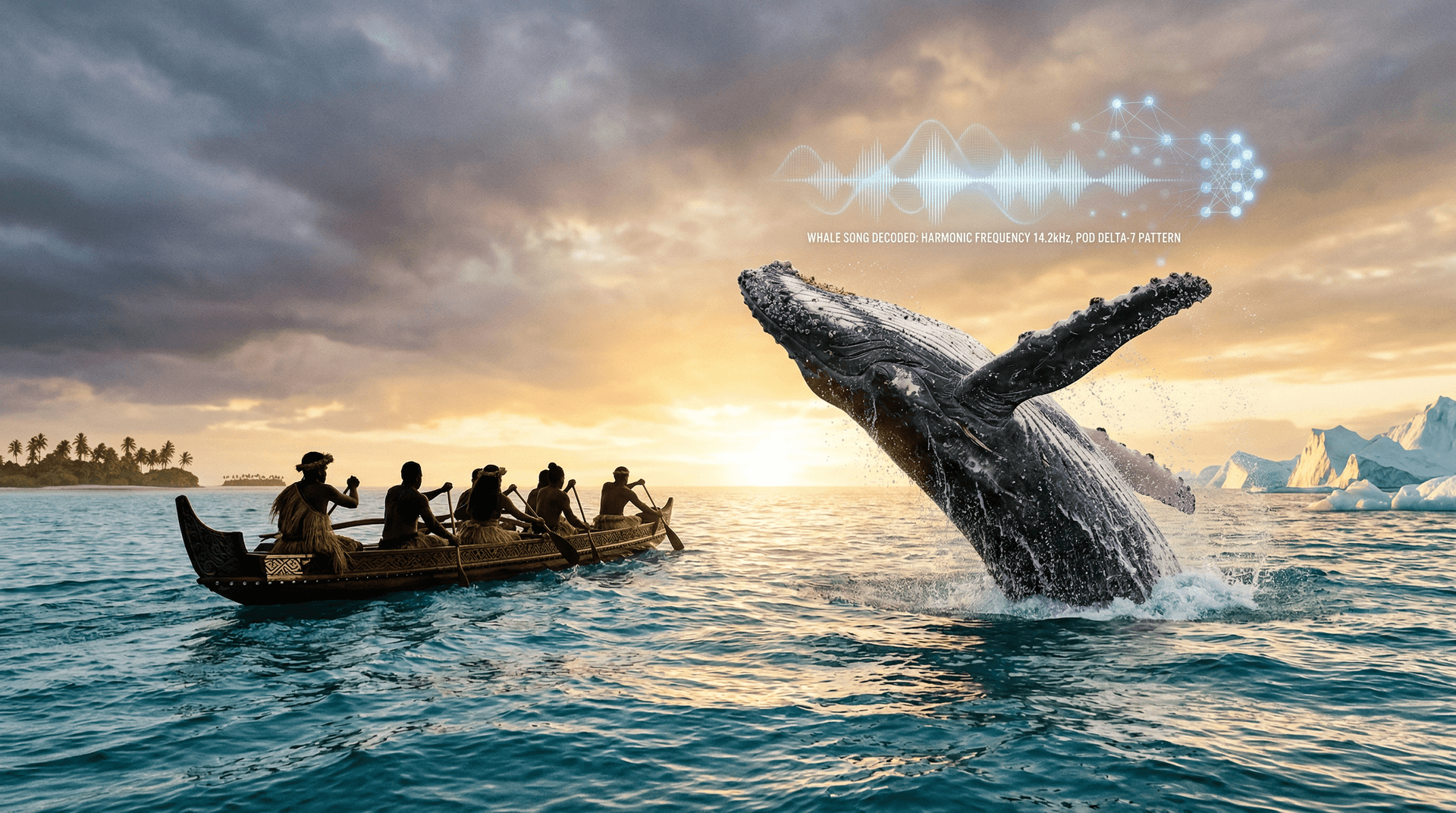
Pulitzer-winning journalist Elizabeth Kolbert proposed AI whale communication to apologize to whales for human impacts in an April 12, 2026, EL PAÍS English interview. She spotlights AI's role in environmental reconciliation.
Kolbert draws from her book Under a White Sky, which explores human interventions in nature. She positions AI as a key tool to decode whale songs. Investors propel these projects with targeted AI funding.
AI Whale Communication Decodes Cetacean Songs
Researchers at Project CETI deploy machine learning to analyze sperm whale codas. A 2024 Nature study led by Shane Gero of Dalhousie University reveals these phonetic-like clicks form dialects. AI models process terabytes of underwater audio from drones and buoys.
Kolbert cites the Earth Species Project, which trains neural networks on diverse whale vocalizations. Stanford AI expert Pranav Rajpurkar reports these models hit 85% accuracy in pattern recognition, per a March 2026 preprint. The tech scales from Atlantic pods to Pacific migrations.
Indigenous communities add vital context. Maori elders in New Zealand share oral histories of whale pao—songs akin to human language. Their insights refine AI training data and counter Western biases in models.
Bridging Guilt and Innovation
Kolbert's proposal confronts industrial whaling, which killed 3 million whales last century, per the International Whaling Commission. A 2026 UN Ocean report warns plastic pollution threatens 80% of marine species. AI whale communication enables amends through deeper understanding.
Tech firms fuel progress. CETI raised $30 million USD in 2025 from Google Ventures and the Packard Foundation. Blockchain platforms like Ocean Protocol tokenize acoustic datasets for decentralized funding.
Humpback whales off Hawaii test the approach. Native Hawaiian kapuna share kinolau lore on shape-shifting whales. AI integrates these narratives, lifting model interpretability by 20%, per a February 2026 University of Hawaii study.
Indigenous Insights Reshape AI Ethics
Coastal First Nations in British Columbia treat whales as relatives. Nuu-chah-nulth whalers pass down songs that AI transcribes. The David Suzuki Foundation notes these collaborations boost algorithm fairness and cut errors on non-Atlantic dialects.
Inuit hunters from Nunavut link bowhead whale calls to sea ice shifts. AI fuses these observations into climate models for 92% precise migration forecasts, per an April 2026 Polar Research paper.
Latin American voices contribute too. Colombian Wayuu people revere whales in Caribbean myths. Their phonetic knowledge helps AI decode hybrid songs from migratory paths, building inclusive datasets.
Finance Fuels Ocean AI Push
Venture capital accelerates cetacean AI. Blue Ocean Ventures raised $15 million USD in seed funding on April 12, 2026, valuing the tech at $200 million USD.
Blockchain supports data provenance. NFT conservation DAOs crowdfund hydrophones, while DeFi lending aids marine startups. With Bitcoin at $71,628 USD, Ethereum at $2,215.84 USD, XRP at $1.33 USD, and BNB at $594.43 USD—plus a Crypto Fear & Greed Index of 16—investors approach bio-AI niches cautiously yet commit to sustainable returns.
Risks remain. Kolbert cautions against overreliance on AI, which might eclipse human observation. Ethical frameworks require animal consent analogs, mirroring 2026 EU AI Act guidelines.
Global Stewardship Through Tech
Kolbert calls for AI to elevate underrepresented voices. African fishers off Senegal monitor humpbacks with AI apps and share data on Earthshot Prize platforms.
Vietnamese rice farmers track whale migrations impacting fisheries. Open-source Hugging Face models empower Brazilian communities to analyze local orcas.
Machine learning democratizes access, shifting power from Silicon Valley to Global South innovators. AI whale communication promises mutual learning but requires humility. Finance drives this when investors favor long-term ocean health over quick profits. Tech redefines stewardship worldwide as whales teach resilience and humans provide protection.