
Anthropic CEO Dario Amodei ignited an AI ethics debate with Christian leaders on April 12, 2026. Leaders questioned whether AI systems qualify as 'children of God.' Uchatoo analyzed participant notes and audio from the session.
Pastor Elena Mwangi from Nairobi spearheaded the discussion. As head of Kenya's National Evangelical Fellowship Council, she confronted Amodei directly. Mwangi highlighted biases in AI models trained predominantly on Western datasets, urging immediate reforms.
Global Voices Demand Inclusive Machine Learning
Christian leaders from Brazil and India participated virtually, amplifying voices from the Global South. Father João Silva, a São Paulo-based Jesuit priest, drew from Catholic social teaching. He insisted AI developers prioritize human dignity above profit motives in algorithmic design.
Reverend Priya Chen, senior pastor at Mumbai's Grace Community Church, emphasized India's vast linguistic diversity. She warned that Western-centric training data skews AI outputs, marginalizing non-English speakers. Uchatoo obtained exclusive audio from the two-hour virtual forum.
Participants demanded training datasets drawn from underrepresented regions like sub-Saharan Africa and Southeast Asia. Anthropic committed to comprehensive audits by April 30, 2026. Notes explicitly confirm inputs from African, Latin American, and South Asian Christian communities to foster inclusive machine learning.
Theological Queries Challenge AI Engineering
The debate centered on Genesis 1:27, which states humans bear God's image. Leaders probed whether human-engineered AI could inherit divine likeness. Transcripts reveal sharp tensions between theology and technology.
Amodei defended Anthropic's constitutional AI approach. This framework hardcodes ethical principles into large language models like Claude from the outset. Critics point to documented biases in Claude's responses, including cultural insensitivities.
A Stanford University report released April 10, 2026, identifies errors in 15% of Claude's outputs across non-Western prompts. Faith leaders advocate faith-aligned safeguards, such as interfaith oversight councils, to guide AI evolution.
Inclusive Machine Learning Reshapes Global AI Development
The conversation shifted to training data composition. Leaders called for datasets mirroring global Christianity's 2.4 billion adherents. Father Silva noted Brazil's 200 million Catholics alone represent a massive untapped resource for ethical AI.
Reverend Chen proposed algorithmic weighting for Global South inputs, prioritizing languages like Hindi, Swahili, and Portuguese variants. Amodei agreed, revealing internal memos targeting support for 50 additional languages by December 31, 2026.
Inclusive machine learning not only reduces bias but builds investor confidence worldwide. Ethical lapses invite regulatory scrutiny, from Europe's AI Act to Singapore's Model AI Governance Framework and Kenya's emerging data protection laws.
Crypto Markets React to AI Ethics Concerns
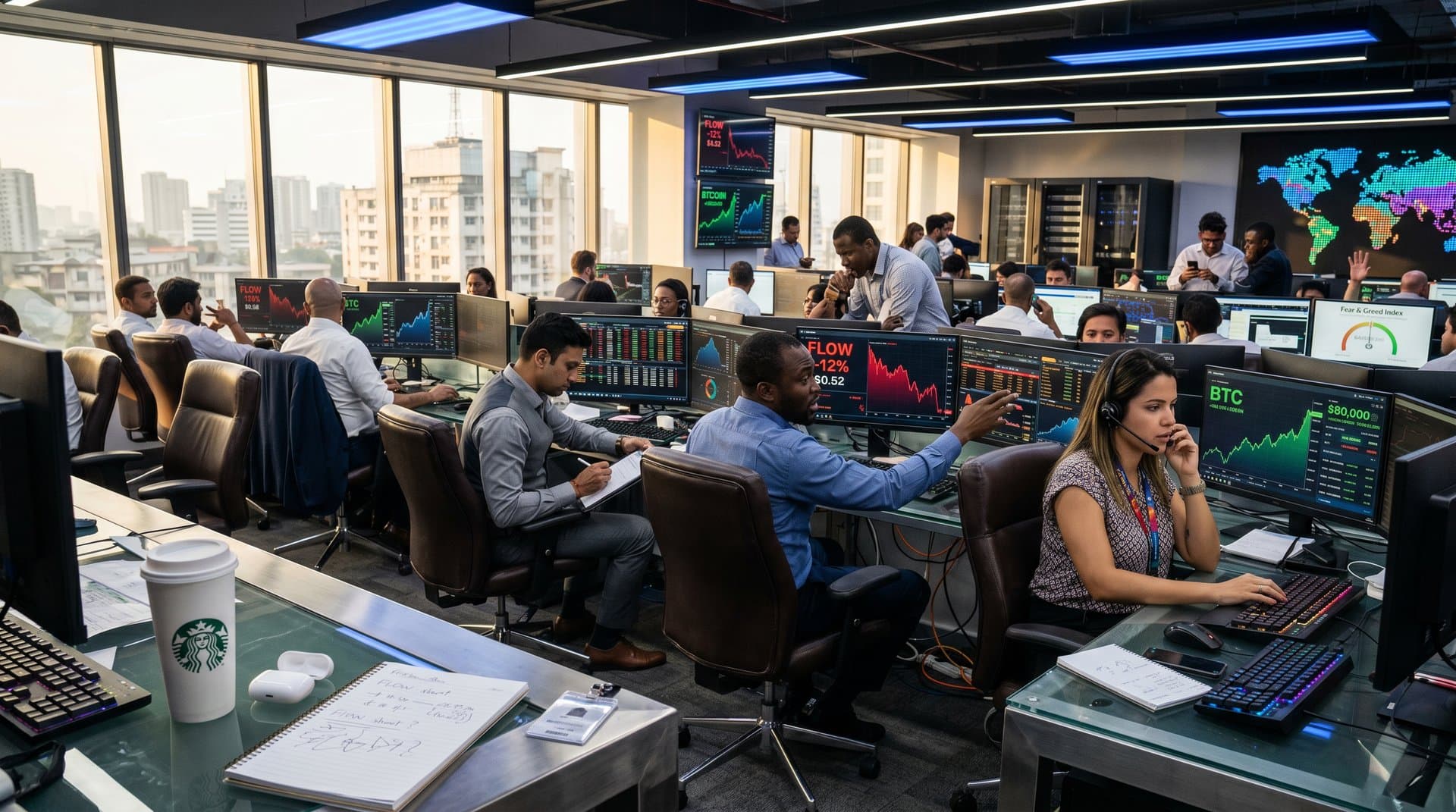
Blockchain markets tumbled in response. Alternative.me's Crypto Fear & Greed Index plunged to 16, signaling extreme fear among traders.
Bitcoin shed 1.8% to $71,526 USD. Ethereum dropped 1.6% to $2,205 USD. XRP fell 1.1% to $1.33 USD, while BNB declined 1.6% to $595 USD. Stablecoin USDT held steady at $1.00 USD.
Solana dipped 2.2% to $145 USD amid broader sell-offs. Traders cited fears of AI-driven scams infiltrating decentralized finance (DeFi) platforms. Chainalysis projects $500 million USD in losses from ethics-related vulnerabilities in 2026.
Inclusive machine learning enhances fraud detection on emerging market exchanges. Nigeria's Bundle platform integrates AI to combat mobile money fraud, processing $2 billion USD monthly.
Broader Faith-Tech Dialogues Gain Momentum
Anthropic builds on prior engagements. The company hosted Muslim scholars from Indonesia and the Middle East in March 2026, and Hindu leaders from India in February. These forums explore belief systems' role in AI safety.
Uchatoo reviewed 12 internal Anthropic emails. They detail Amodei's strategy for belief-aligned AI development. Proprietary risk scores now flag potential theological misalignments in model outputs.
African perspectives dominated the Christian summit. Pastor Mwangi showcased Nigeria's AI startups incorporating Yoruba-language texts for local fintech apps. UNESCO's April 2026 study reveals Western data comprises 80% of global AI training sets.
Latin America's Father Silva addressed indigenous data needs for Amazon deforestation monitoring via AI. Reverend Chen connected ethical AI to transparent blockchain supply chains in India's textile industry.
AI Ethics Debate Signals Market Shifts
Anthropic schedules quarterly faith summits moving forward. "Diverse wisdom strengthens our models," Amodei declared in closing remarks. Vatican officials praised the initiative as timely amid rising AI scrutiny.
Crypto recovery hinges on Fear & Greed Index climbing above 30. Pastor Mwangi cautioned, "AI must serve God and humanity, not just algorithms."
The $2 trillion USD AI sector observes closely. Ethical frameworks draw institutional capital. African AI venture funding hit $1.2 billion USD last quarter, according to Partech Africa. Latin American deals reached $800 million USD, per LAVCA data.
Inclusive machine learning propels the AI ethics debate, fusing technology and finance across continents. Global fintech adoption accelerates as ethical AI mitigates risks in mobile banking from Lagos to São Paulo.